Ebook The Sentences Book 2: On Creation (Mediaeval Sources in Translation)
When you currently feel bemused to attempt the specific books to read, The Sentences Book 2: On Creation (Mediaeval Sources In Translation) can be an option. This is a wise option for you. Well, the book could lead you to make much better options and also alternatives. After obtaining guide, you will not be bemused once more to locate the ideal book. Publication is one of the home windows that open the world. This book is likewise exactly what you need in order to accompany you.
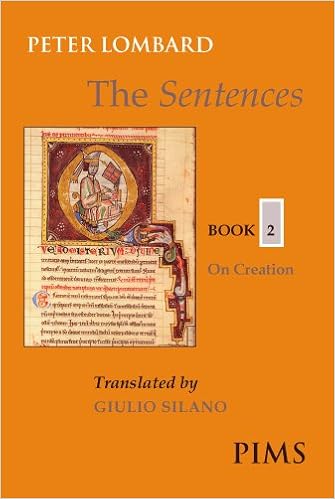
The Sentences Book 2: On Creation (Mediaeval Sources in Translation)

Ebook The Sentences Book 2: On Creation (Mediaeval Sources in Translation)
Adhering to the great behavior will certainly reveal the excellent practice, too. When having a great friend that has reading habit, it is needed for you to have that such behavior. Well, also reading is really not your style, why don't you try it when? To attract you to like reading, we will provide The Sentences Book 2: On Creation (Mediaeval Sources In Translation) currently. Right here this book has the tendency to be the most referred book that many people review it.
The presence of this The Sentences Book 2: On Creation (Mediaeval Sources In Translation) in this globe includes the collection of a lot of desired publication. Even as the old or new book, book will offer impressive advantages. Unless you do not feel to be burnt out every single time you open up the book as well as review it. Actually, publication is an extremely terrific media for you to enjoy this life, to enjoy the globe, and to know everything worldwide.
When somebody must visit guide establishments, search establishment by shop, rack by rack, it is extremely frustrating. This is why we supply the book compilations in this web site. It will ease you to look guide The Sentences Book 2: On Creation (Mediaeval Sources In Translation) as you such as. By searching the title, publisher, or authors of guide you desire, you could discover them rapidly. Around the house, office, or even in your means can be all best location within web links. If you intend to download the The Sentences Book 2: On Creation (Mediaeval Sources In Translation), it is really easy after that, due to the fact that now we extend the connect to acquire and make bargains to download The Sentences Book 2: On Creation (Mediaeval Sources In Translation) So simple!
Accumulate the book The Sentences Book 2: On Creation (Mediaeval Sources In Translation) start from now. Yet the brand-new method is by gathering the soft data of guide The Sentences Book 2: On Creation (Mediaeval Sources In Translation) Taking the soft data can be conserved or saved in computer or in your laptop. So, it can be more than a book The Sentences Book 2: On Creation (Mediaeval Sources In Translation) that you have. The easiest means to reveal is that you can also conserve the soft file of The Sentences Book 2: On Creation (Mediaeval Sources In Translation) in your ideal and also readily available gizmo. This problem will intend you too often review The Sentences Book 2: On Creation (Mediaeval Sources In Translation) in the downtimes greater than chatting or gossiping. It will not make you have bad habit, yet it will lead you to have much better practice to check out book The Sentences Book 2: On Creation (Mediaeval Sources In Translation).
Product details
Paperback: 282 pages
Publisher: PIMS; 2nd ed. edition (January 1, 2008)
Language: English
ISBN-10: 0888442939
ISBN-13: 978-0888442932
Product Dimensions:
6 x 0.7 x 9 inches
Shipping Weight: 8 ounces (View shipping rates and policies)
Average Customer Review:
5.0 out of 5 stars
3 customer reviews
Amazon Best Sellers Rank:
#414,872 in Books (See Top 100 in Books)
It is a Very importante ne that a famous publisher like PIMS has offered this opportunity for all The scholars Who are studying this questione, me too.It is a Very satisfaction use this Book of Sentenze, translated in English Very Well And Very Clear. Tank You To The translator and the publisher!.
Summary: Peter Lombard presents a confused understanding of Augustine’s view of creation and anthropology modified to a semi-Pelagian to almost Pelagian theology either purposely or through ignorance of Augustine’s authentic works.According to Peter, “For there is in the rational soul a natural will, by which it naturally wills what is good, although weakly and feebly, unless grace assists. . .†(2.24.1.3, pg. 109). This free will is described as such “because, without compulsion or necessity, it is able to desire or elect what it has decreed by reason†(2.25.4.2, pg. 118). “And yet we do not deny that there are many good things which are done by man through free choice before this grace and apart from grace†(2.26.7.2, pg. 130).And then this lovely quote which he attributes to Jerome, but since the Renaissance is now recognized as Pelagius:Jerome teaches in his Explanation of the Catholic Faith to Pope Damascus, where he strikes at the errors of Jovinian, Manichaeus, and Pelagius, saying: “We acknowledge that choice is free so as to say that we are always in need of God’s aid; and that both those are in error who say with Manichaeus that man cannot avoid sin, and those who assert with Jovinian that man cannot sin. Each of them takes away freedom of choice. But we say that man is always able to sin and not to sin, so that we confess ourselves to be ever free in our choice. This is the faith which we learned in the Catholic Church and which we have always held.â€It’s not clear to me that Peter Lombard is unaware that he is quoting Pelagius to support conclusions that are both non-Augustinian and unbiblical. (This will be discussed more in the review on book 3 and 4.) At the same time “among the works attributed to Augustine†were sermons, letters, and writings that were not authentically Augustinian in authorship or doctrine, and so it is possible that he’s struggling to harmonize self-contradictory teachings within what he understands is Augustine’s canon. This is occurs while he attempts to harmonize the contradictory teaching of Ambrose, Augustine, Jerome, Bede, and so forth. There is even an effort to harmonize these diverse teachings with the Bible.He teaches along with others before him that the “pollution which the flesh contracts in its conception from the burning of the parents’ joining and their lustful concupiscence†(2.32.6.2, pg. 156). In other words, we are born with a sin nature or original sin, because our parents or one of our parents enjoyed conceiving us. While Augustine in his authentic works lays out the framework for this sort of doctrine, the most blatant support comes from Augustine-like quotes from Fulgentius (c. 462-527).Peter Lombard also rejects the possibility that at conception both physical and spiritual elements of parents are passed to the child. The technical term for this is traducianism: Peter rather firmly states, “But the Catholic faith utterly rejects this and condemns it as opposed to truth since, as we said above, that faith admits that flesh alone, and not souls, is transmitted. And so it is not according to the flesh, that original sin is derived from parents†(2.31.3.1, pg. 154). Augustine was certainly more open to the possibility than this quote allows and traducianism was held by other church fathers including Tertullian.Oddly enough he provides an explanation of the pop-culture reference to an angel on one shoulder and a demon on the other: apparently this was first taught by Origen, then by Gregory of Nyssa, and popularized for posterity by Lombard (2.11.1.2, pg. 46).He may have originated the now hoary-headed sermon illustration:Why woman was formed from the man’s side and not from some other part of his body. But although woman was made from man for these reasons, nevertheless she was formed not from must any part of his body, but from his side, so that it should be shown that she was created for the partnership of love, lest, if perhaps she had been made from his head, she should be perceived as set over man in domination; or if from his feet, as if subject to him in servitude. Therefore since she was made neither to dominate, nor to serve man, but as his partner, she had to be produced neither from his head, nor from his feet, but from his side, so that he would know that she was to be placed beside himself whom he had learned had been taken from his side (2.28.2; pg. 77).Benefits/Detriments: Book 2 exposes what happens when a possibly earnest attempt is made to harmonize the Bible, current church practice, and the diverse teaching of the church fathers. It’s rather a mishmash and at points incoherent.
Great buy...
The Sentences Book 2: On Creation (Mediaeval Sources in Translation) PDF
The Sentences Book 2: On Creation (Mediaeval Sources in Translation) EPub
The Sentences Book 2: On Creation (Mediaeval Sources in Translation) Doc
The Sentences Book 2: On Creation (Mediaeval Sources in Translation) iBooks
The Sentences Book 2: On Creation (Mediaeval Sources in Translation) rtf
The Sentences Book 2: On Creation (Mediaeval Sources in Translation) Mobipocket
The Sentences Book 2: On Creation (Mediaeval Sources in Translation) Kindle

0 Komentar untuk "Ebook The Sentences Book 2: On Creation (Mediaeval Sources in Translation)"